
Some links below are affiliate links, that help keep this site running at no extra cost to you. Learn more here.
Elche, also known as Elx in Valencian, is a historic city in the province of Alicante, in the Valencian Community of Spain. It was labelled an oasis for its vast palm grove, rich cultural heritage, and vibrant atmosphere. The city takes care of its nature and is one of the greenest cities in the entire region.
Where is Elche?
Elche is approximately 20 kilometres (12 miles) inland from the Mediterranean Sea and lies about 23 kilometres (14 miles) southwest of the city of Alicante.
What to see in Elche
There are so many amazing things to do in Elche which I’ve written a detail guide about. I’ve included a glimpse of activities and must-see places below.
El Palmeral de Elche
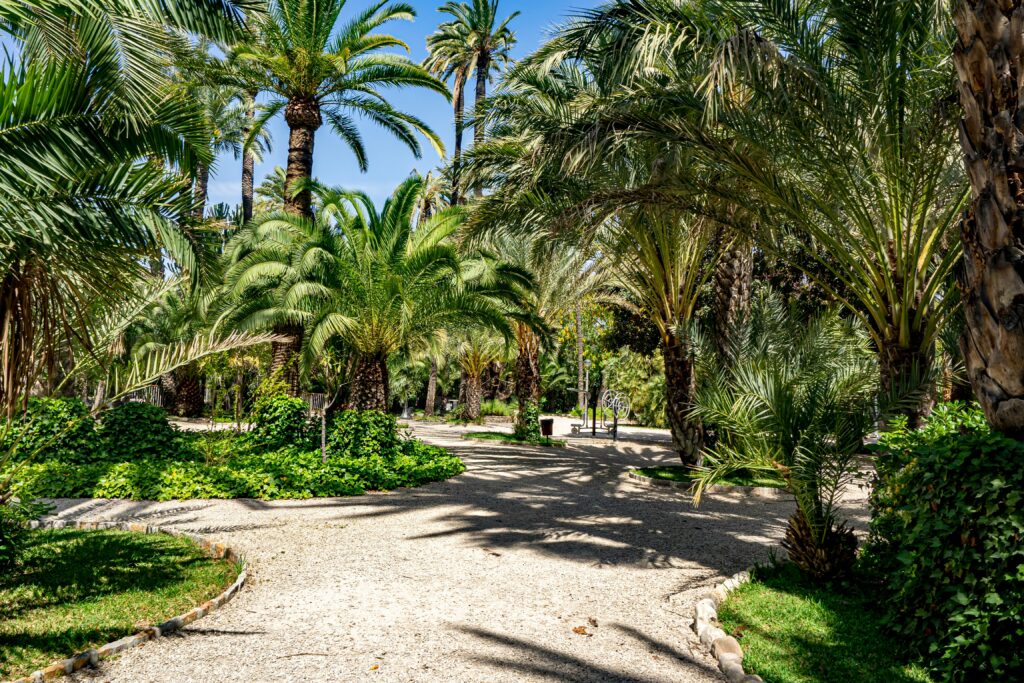
Elche’s palm grove, known as El Palmeral, is one of the city’s most famous attractions. El Palmeral is a vast palm grove which runs through the city of Elche. It is one of the most important and unique agricultural landscapes in Europe, recognised as a UNESCO World Heritage site in 2000.
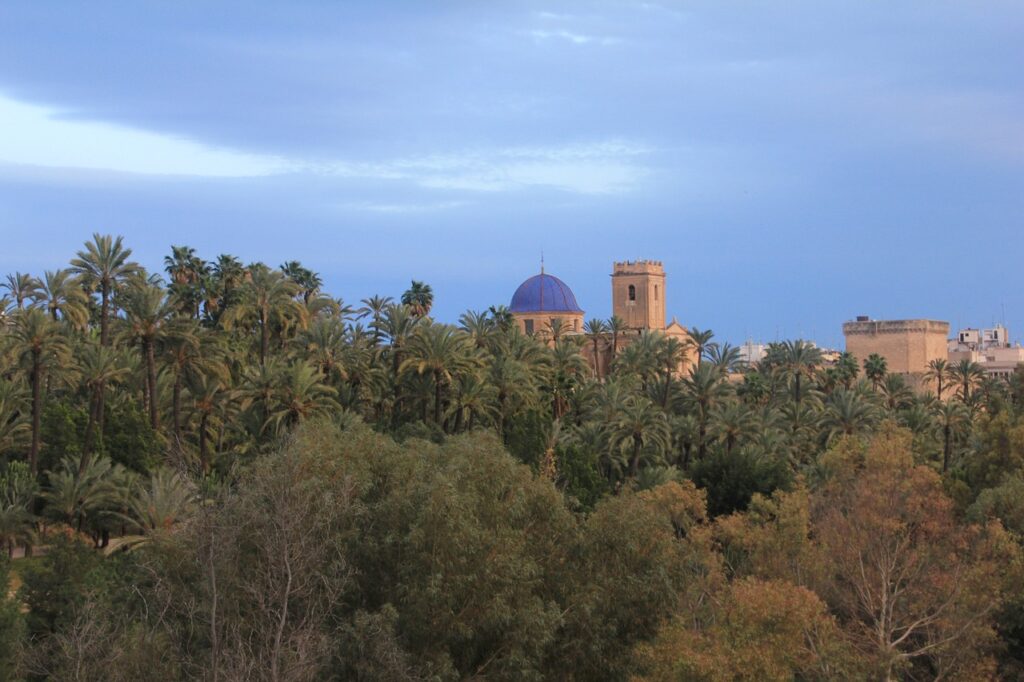
The grove contains over 200,000 palm trees and is a stunning example of agricultural and landscape design.The grove is made up of a series of traditional walled gardens known as huertos, the most famous of which is the Huerto del Cura. Here you can find some of the oldest specimens in the grove, including the iconic Imperial Palm — a single tree with eight separate trunks that grow outward like a candelabra. It has been drawing visitors since the 19th century and is one of the most photographed sights in the city. Note that the Huerto del Cura does charge an entrance fee, unlike the wider Palmeral.
How to enter the Palmeral
There is no charge for visitors to enter the Palmeral. Visitors can enter anytime and explore on foot or by bike. There are several walking paths and guided tours available.
Elche’s White Palms
Elche is the only place in Europe that produces white palm fronds, which are created by tying the leaves of the palm tree together before they open so that they grow without sunlight and remain pale in colour. These bleached fronds are considered a symbol of peace and are in high demand for Palm Sunday celebrations across the world. Every year, a selection is sent to the Pope in Rome and to the Spanish Royal Family — a tradition that has continued for centuries and is one of the most quietly extraordinary things about this city. You will notice the tied palms throughout the Palmeral if you look up.
Basilica of Santa Maria
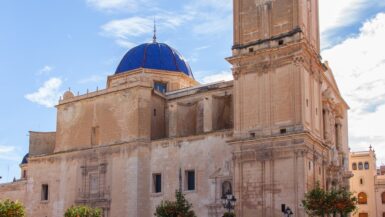
Located within Vila Murada (Elche’s old town) you can find the Basilica of Santa Maria, a stunning Baroque church built between 1672 and 1784 on a site that was formerly occupied by a mosque during Muslim rule, followed by earlier Gothic and Renaissance churches. It is one of the finest examples of Baroque architecture in the Valencia region and is recognised by UNESCO as a significant cultural heritage site.
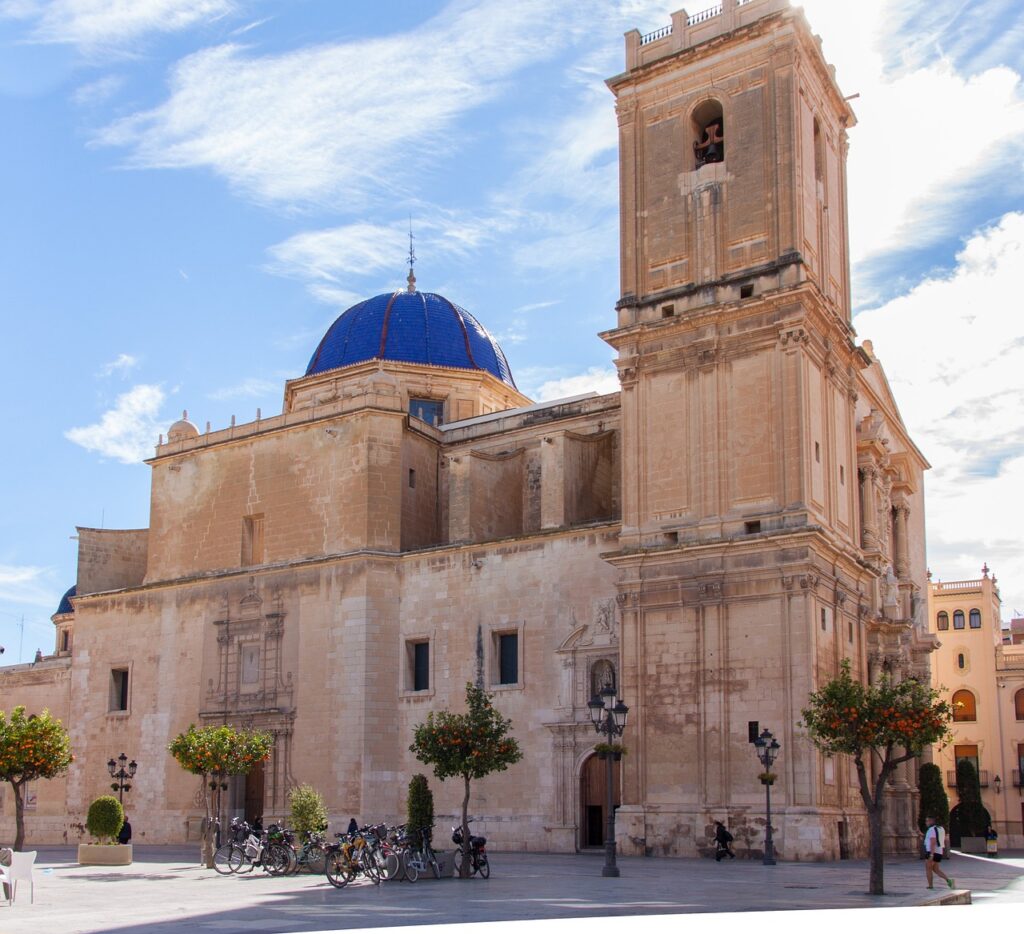
It has an impressive baroque facade and a beautifully decorated interior. The basilica is also the home of the Mystery Play of Elche (Misteri d’Elx), a two-act sacred musical drama that is performed entirely in song each year on 14 and 15 August. The play tells the story of the final days, Assumption, and coronation of the Virgin Mary, and has been performed here without interruption since the 15th century. It was declared a UNESCO Masterpiece of the Oral and Intangible Heritage of Humanity in 2001 — a much higher honour than a simple mention.
A tip is to climb the spiral staircase to the top of the basilica’s bell tower for panoramic views of Elche and the surrounding palm groves.
Vinalopó River
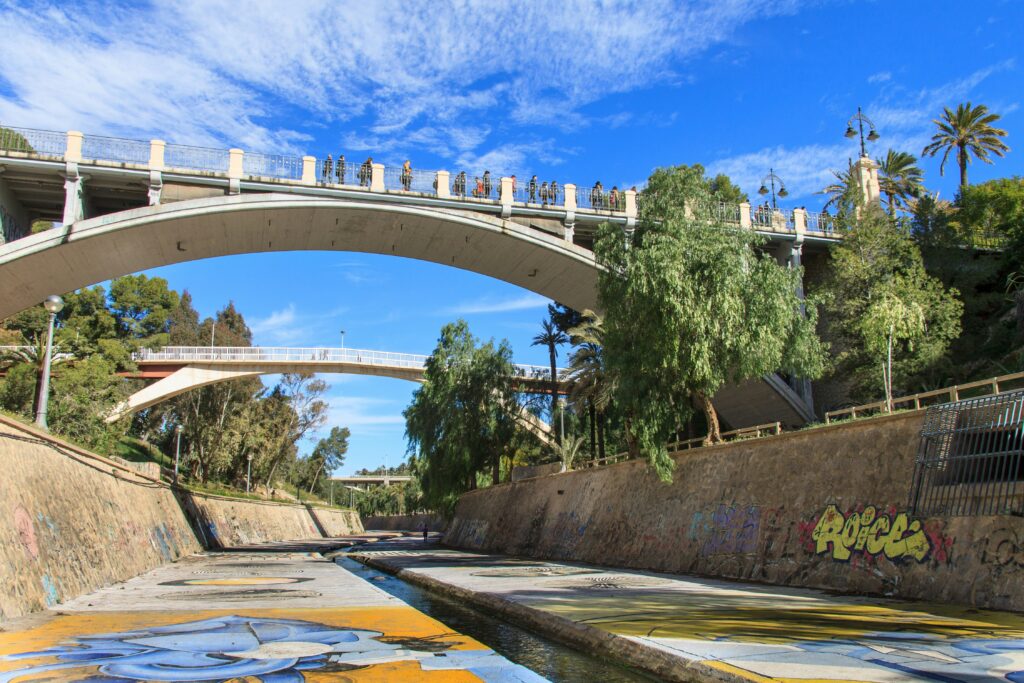
The Vinalopó River is a small river flowing throughout the province and passing through Elche’s palm grove. Its total length is 81 km, and eventually empties back into the Mediterranean sea at Salinas de Santa Pola.
As it meanders through the city centre, you can enjoy a scenic walk along its route, which gracefully winds through the heart of Elche, or appreciate it from above from the Puente del Altamira or the Puente del Ferrocarril.
Paseo de la Estación
The Paseo de la Estación is a beautiful promenade that runs alongside the Vinalopó River. It is lined with palm trees and offers a relaxing place for a walk or a picnic.
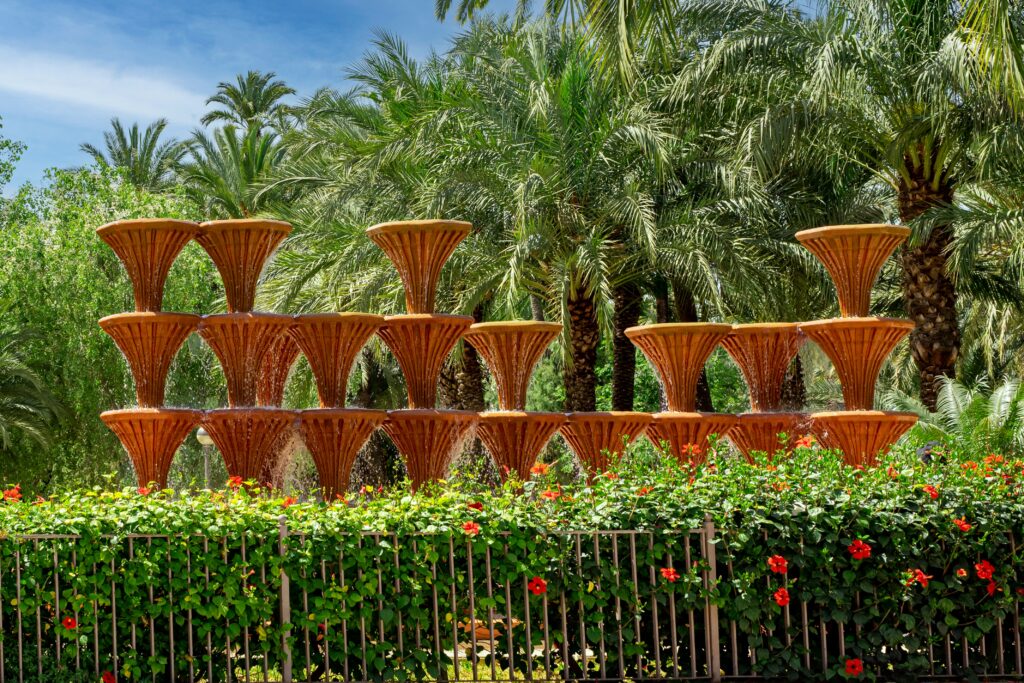
The promenade connects various parts of the city and provides easy access to several parks and gardens. Its a popular area for pop-ups including street food markets, fairs, and festivals.
Altamira Palace
Also known as Alcázar de la Señoría, the Altamira Palace is a historic fortress based in Elche old town dating back to the 12th century. It located a few streets away from the Basilica of Santa Maria in the Vila Muruda.
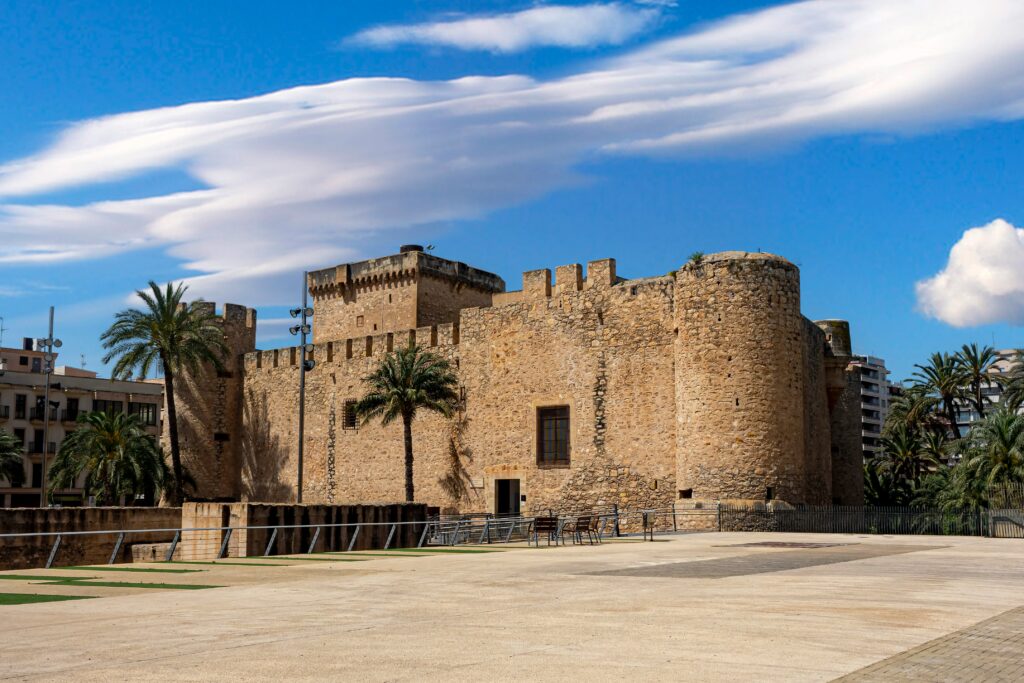
It has been restored and now houses the Archaeological and History Museum of Elche (MAHE), which showcases Elche’s history from prehistoric times to the modern era.
The Lady of Elche
One of the most remarkable stories connected to Elche is that of the Lady of Elche, a limestone bust carved around the 4th century BC that was discovered in 1897 at La Alcudia, a site just outside the city. The sculpture is considered one of the finest examples of ancient Iberian art ever found, and its purpose remains a subject of debate among scholars — some believe it was a funerary urn, others think it served a religious or ceremonial function. The original is now housed at the National Archaeological Museum of Spain in Madrid, but a replica is on display at the Archaeological and History Museum of Elche (MAHE) in the Altamira Palace, which is well worth visiting while you are in the city.
La Alcudia Archaeological Site
Located just a couple of kilometres south of the city centre, La Alcudia is the site where both the Lady of Elche was discovered and the ancient Ibero-Roman city of Illici once stood. The site contains extensive ruins and has an on-site museum that walks you through the excavations and finds. If you have an interest in ancient history, this is an easy and rewarding addition to your day in Elche.
Calahorra Tower
Standing in the heart of Elche’s old town, the Calahorra Tower (Torre de la Calahorra) is a medieval defensive tower that has watched over the city for centuries. It sits close to the Basilica of Santa Maria and the Altamira Palace, making it a natural stop as you explore the historic centre.
It is one of the most recognisable landmarks in the city and a great example of the defensive architecture that once protected medieval Elche.
Elche Beaches
Elche is 20km inland from the coast, but still has six of its own beautiful beaches to visit. I’ve written up a guide to Elche beaches if you want more information.
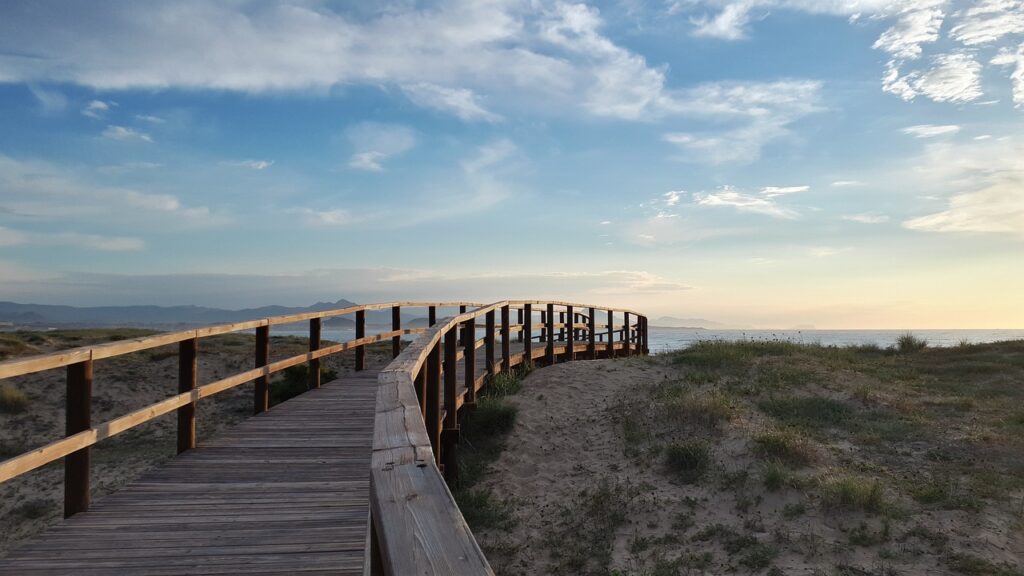
Here’s a list of its beaches:
- Playa del Carabassí
- Playa de El Pinet
- Playa Varadero
- Playa El Rebollo
- Playa Can Agua Amarga
- Arenales del Sol
- Playa Lisa
- Playa de la Marina
Travelling around Elche
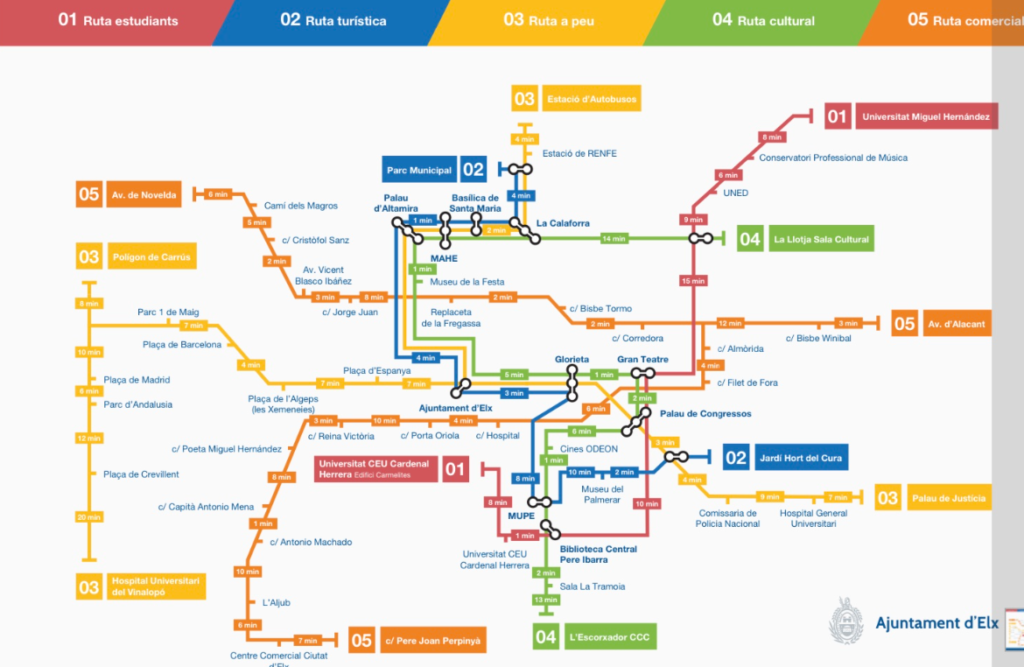
If you’re staying in the centre, Elche is quite a walkable city, especially in the Old Town area. If you’re not the walking type, fear not, as there is a metro system and frequent buses around the city. There are also taxis in Elche, although these will be more expensive.
Here is a map of the Elche metro system:
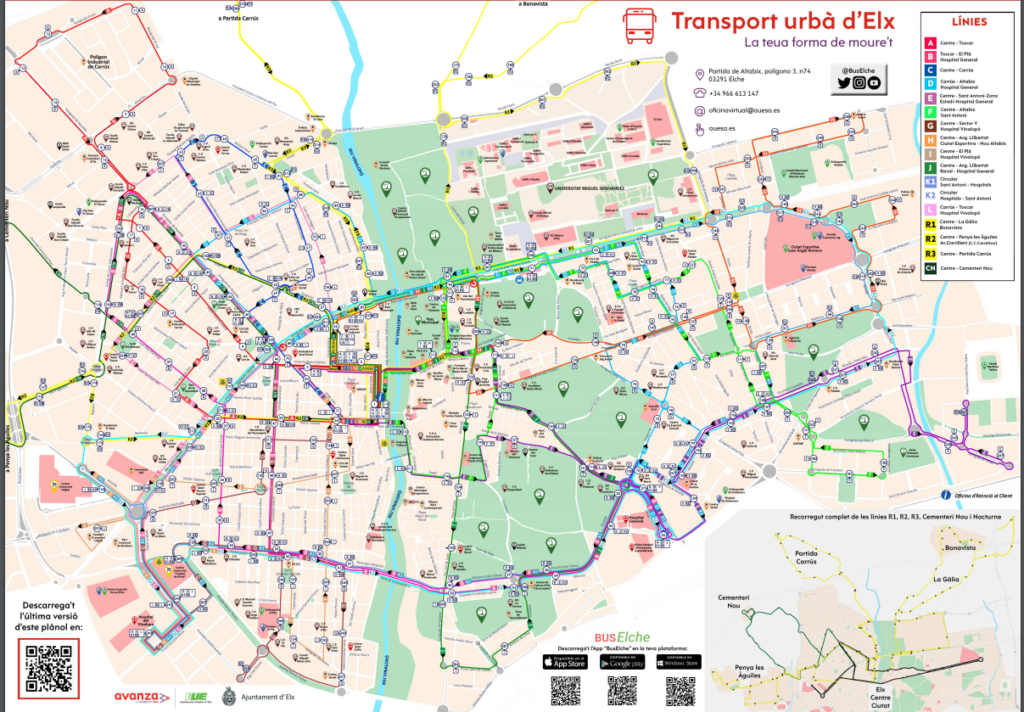
The main bus station can be found on Av. del Alcalde Vicente Quiles and can take you to nearby cities such including Alicante. Buses with Line 1A and Line 1B will take you to Alicante Airport.
Here is the Elche Bus map:
Dining out
Elche offers a wide range of dining options, from traditional Spanish tapas bars to family-run restaurants serving hearty local cooking. The city’s signature dish is arroz con costra, a baked rice dish unique to the Elche area that is topped with a golden egg crust and cooked in the oven. It is one of those dishes you really should not leave without trying. You will also find date-based products throughout the city, from sweets and pastries to date-infused liqueurs, all stemming directly from the palms that surround you.
Another local staple worth seeking out is olla de Elche, a traditional vegetable stew with deep Moorish roots. The Mercado Municipal (the city’s covered market) is a great place to pick up local produce, cured meats, and fresh dates. For something more special, La Finca, located just outside Elche, holds a Michelin star and is one of the most celebrated restaurants in the region.
Activities around Elche
I’ve added a more in-depth guide to this, but there are plenty of things to do in and around Elche. From walking tours, kayaking tours, safari, and a nearby waterpark, you can plan an amazing trip.
Festivals in Elche
The Mystery Play in August is the headline event, but Elche has other festivals worth knowing about. The Nit de l’Albà takes place on the night of 14 August and involves one of the most spectacular fireworks displays in the entire Valencia region, drawing huge crowds from across the Costa Blanca.
It is one of those events that is difficult to put into words until you have experienced it. Elche is also worth visiting around Palm Sunday in spring, when the city’s unique white palm fronds are blessed and distributed — a tradition deeply tied to the city’s identity and unlike anything you will see anywhere else in Europe.
How far is Alicante airport from Elche?
Alicante Airport (ALC) is located just 20 kilometres (12 miles) from Elche, making it one of the closest major towns to the airport.
The most convenient way to reach Elche from Alicante Airport is by car, taking only about 20 minutes on the N-338 and A-70 roads.
Best methods to travel from Alicante airport to Elche
Rent a car from Alicante Airport
You can find the car rental services are located just as you exit the Arrivals hall. As soon as you exit, turn right past the first pillar, and you’ll immediately see all the rental car counters including Hertz, Goldcar, EuropCar, Centauro, Ok Mobility, and Firefly.
I recommend booking online through RentalCars.com, which compares all available providers to find the best prices. In my experience, it’s a lot quicker as you can simply walk up to your chosen service and collect your keys without adding more time adding all your details.
Having a car gives you the freedom to visit other nearby areas such as the stunning beaches nearby at Santa Pola, or the wonderful inland villages for an amazing day trip near Elche at your own pace.
You can book using the search form below.
Taxis from Alicante Airport to Elche
Taxis are another convenient option which can quickly take you to Elche with almost no waiting time. They’re available at Level 0 of Alicante Airport and provide the most direct route to Elche.
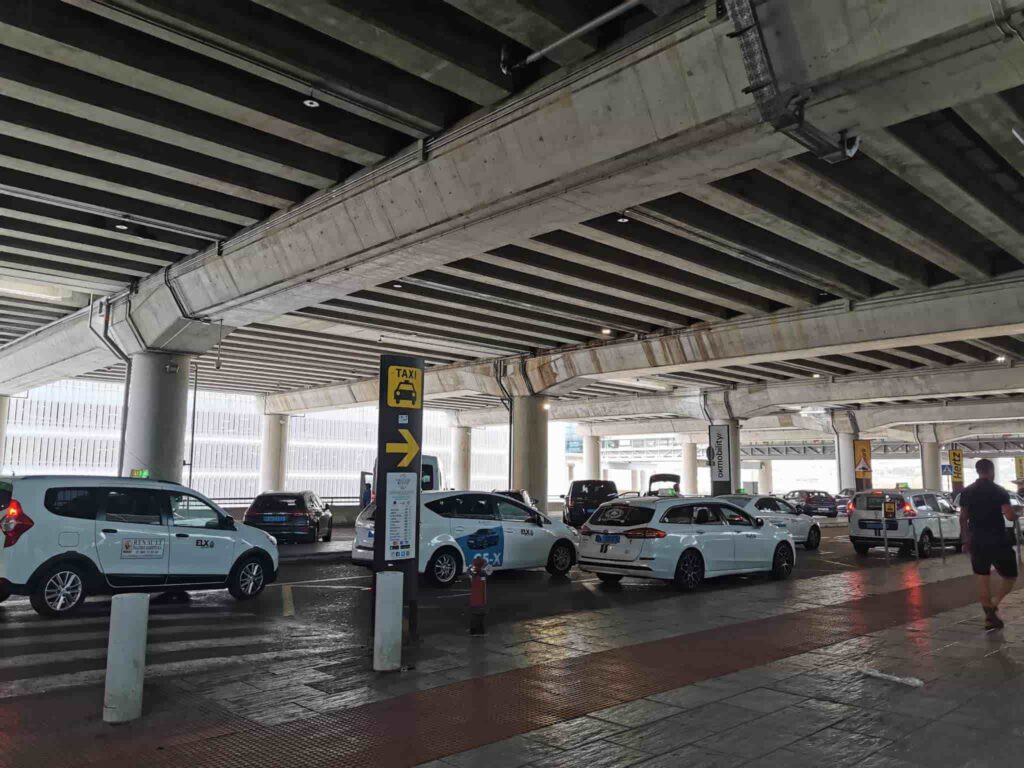
Due to the short distance, taxi fares to Elche are quite reasonable, starting from around €20-25. I still recommend confirming the price with the driver before setting off to avoid any surprises.
Taxis at Alicante Airport
If you want to secure a quote and arrange a time with a taxi, you can also book a taxi in advance using services like Kiwitaxi to secure a fixed price. Use the search widget below to check current rates.
Buses from Alicante Airport to Elche
Alicante Airport offers regular bus services to Elche run by Alsa, Spain’s main intercity bus company.
The C6 bus line runs directly between the airport and Elche city centre. Buses are comfortable, with air-conditioning and free Wi-Fi. The journey takes approximately 30 minutes and a standard adult ticket costs €4.50. It is worth checking the current schedule on the Alsa website before travelling.
This is an outstanding option for solo travellers or small groups on a budget, as the frequency and low price make it very practical.
How to find the bus stop at Alicante Airport
Bus stops are located on Floor 2 of the terminal. When you exit through any door on Floor 2, turn right and you’ll see the bus stops with electronic displays showing destinations and times.
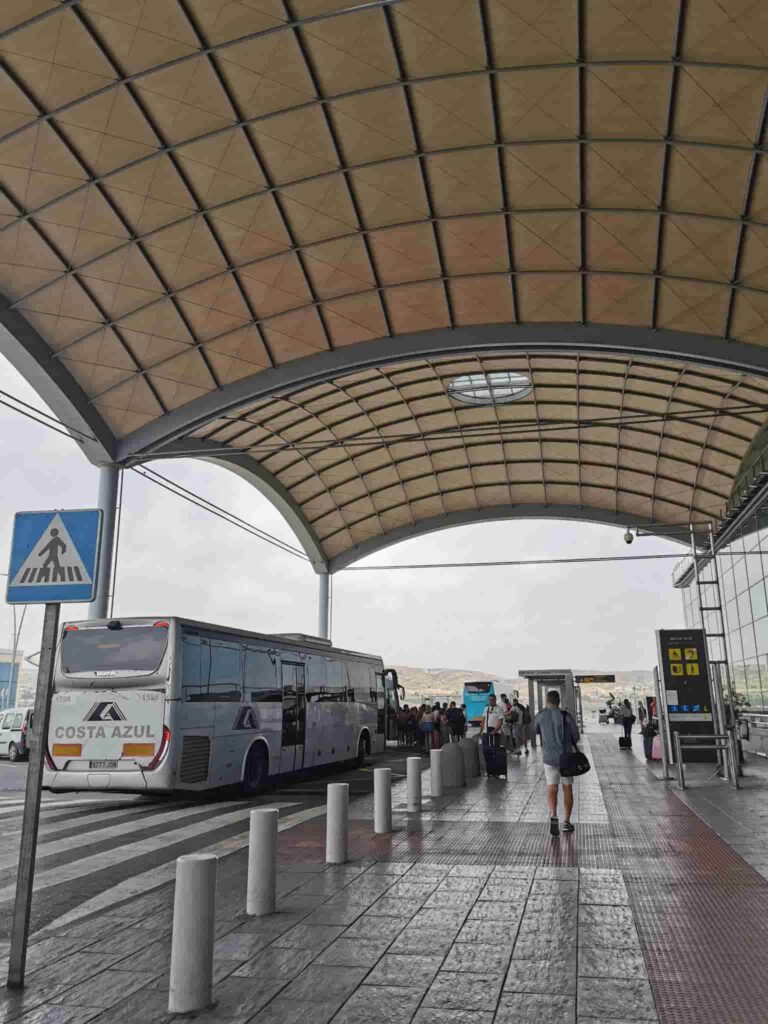
The L1 bus to Elche is the most direct bus to take to Elche. It’s best to check the latest schedule on the Alsa website or at the airport information desk.
Shuttle bus transfers from Alicante Airport to Elche
Beniconnect only offers private shuttle bus transfers from Alicante Airport to Elche. Their service desk is located on Floor 0 of the airport.
You can book directly through their website to get a quote based on your needs.
When to Visit Elche
The best time to visit Elche is spring (April to June) or early autumn (September to October), when the weather is warm and comfortable for walking around the old town and exploring the Palmeral without the intense heat of high summer.
July and August can be very hot, often exceeding 35°C, though if you are planning to attend the Mystery Play or the Nit de l’Albà, the second week of August is the time to go. Elche works well as a day trip from Alicante,
Torrevieja, or anywhere along the Costa Blanca — it is only about 20 to 30 minutes by road from most coastal resorts. A half day is enough to cover the main highlights, but a full day gives you time to explore the old town properly, visit the Palmeral, and stop for a long lunch.